Why Choose Bagasse Tableware for a Greener Future
You notice the world is changing. People want eco-friendly choices instead of harmful plastics and paper. The environment has more problems from waste and pollution. This makes you think about your choices every day. More people now want eco-friendly tableware. Bagasse tableware is popular as homes, restaurants, and schools pick greener options. Bagasse tableware is strong, useful, and good for the planet. It helps protect nature. When you pick Bagasse Tablewares, you help keep the planet clean. You also show you care about a better future.
Key Takeaways
- Bagasse tableware is made from sugarcane fiber. Sugarcane is a renewable resource. It grows back every year. This makes bagasse a smart eco-friendly choice.
- These plates and bowls are strong. They can handle heat. They are safe for hot or cold foods. They do not leak or break easily.
- Bagasse tableware breaks down fast in compost. It usually takes 60 to 90 days. This helps cut down landfill waste. It also helps make soil better in a natural way.
- Picking bagasse instead of plastic or paper lowers pollution. It avoids bad chemicals. It saves trees and fossil fuels.
- Using bagasse tableware helps keep the planet clean. It shows you care about a greener future with every meal.
What Is Bagasse?
Bagasse Tableware Overview
You can help the planet by choosing bagasse tableware. Bagasse comes from sugarcane. Factories crush sugarcane to get sugar. The leftover fiber is called bagasse. This fiber is strong and grows back every year. Sugarcane farms make about 1.16 billion tons of sugarcane each year. This gives us almost 279 million metric tons of bagasse. Instead of throwing it away, people use it to make plates and bowls.
Bagasse tableware is special because it uses leftover material. You get sturdy plates, bowls, and trays that are good for the earth. These plates work well at home, at parties, or in restaurants. When you pick bagasse plates, you help keep the planet clean. You also use less plastic and wood.
Tip: Bagasse tablewares are not only eco-friendly. They also look nice and feel good to use!
How Bagasse Tablewares Are Made
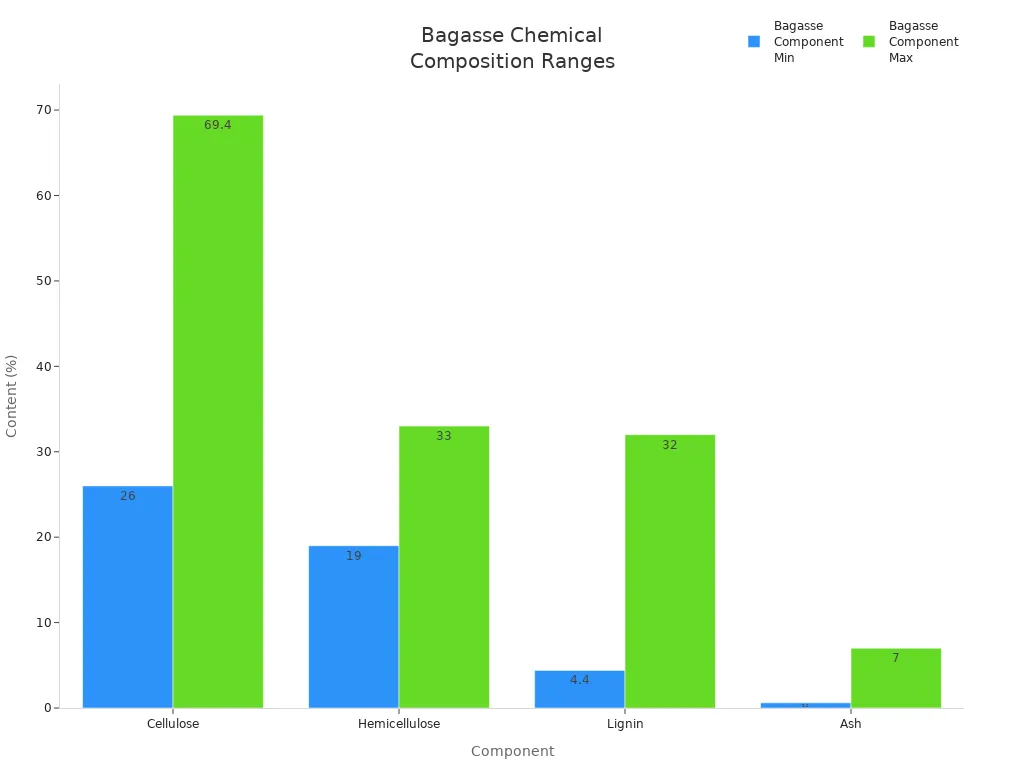
Bagasse tableware starts with fibers left after making sugar. These fibers have a special mix of chemicals. Here is what is inside them:
|
Component |
Content Range (%) |
Notes on Comparison with Other Fibers |
|---|---|---|
|
Cellulose |
26 - 69.4 |
High cellulose content, mostly crystalline (~47%) |
|
Hemicellulose |
19 - 33 |
Present as branched polysaccharides |
|
Lignin |
4.4 - 32 |
Higher proportion of H-type lignin (p-hydroxyphenyl) than softwood/hardwood lignins; lower methoxy content |
|
Ash |
0.6 - 7 |
Contains small amounts of minerals including silica |
|
Extractives |
Varies |
Includes wax, fat, proteins |
|
Metals |
Present in small amounts |
Increase brittleness of fibers |
Bagasse plates are strong because they have lots of cellulose. Lignin acts like glue and makes the plates tough. The special lignin also helps bagasse plates break down faster. This makes bagasse tableware a great choice if you want compostable products.
To make bagasse tableware, factories clean and press the fibers. They use heat and pressure to shape the plates and bowls. No bad chemicals are used. The tableware is safe and natural. Bagasse plates can hold hot or cold food. When you finish eating, you can compost the plates. They will break down and return to the earth.
Bagasse tableware is a smart and natural choice. You help the earth every time you use bagasse plates. Try them today and see the change for yourself.
Eco-Friendly Benefits
Biodegradable and Compostable
You want to help the earth. Picking bagasse tableware is an easy way. Bagasse plates break down fast. They are biodegradable and compostable. Most plates decompose in 60 to 90 days at a composting site. Some thin plates break down at home. Tiny microbes eat the cellulose fibers. This turns old plates into compost. Compost gives nutrients to the soil. It helps the soil stay healthy.
Note: Composting the right way helps bagasse plates break down faster. It also makes sure no bad chemicals or microplastics are left behind.
You do not need to worry about toxic chemicals. Bagasse tableware does not leak BPA, PFAS, or phthalates. These plates are safe for your family and the earth. Compostable bagasse plates support a cycle that helps nature. You use the plate, compost it, and help plants grow.
Here are some important eco-friendly benefits of composting bagasse plates:
- Bagasse plates break down in about 90 days. Plastics last for hundreds of years.
- Composting bagasse adds nutrients to the soil. This makes the soil better and richer.
- Composting lowers methane gas compared to putting waste in landfills.
- Bagasse plates do not leave bad chemicals or microplastics in nature.
Reduces Waste and Pollution
You want less plastic and paper waste. Bagasse tableware helps you do this. Bagasse plates come from sugarcane. Sugarcane grows every year. Factories use leftover fiber from making sugar. This means you help reuse farm waste. It does not go to landfills or get burned. This choice saves resources and helps the planet.
Let’s look at how bagasse plates compare to plastic and paper plates:
|
Feature |
Bagasse Plates |
Plastic Plates |
Paper Plates (Standard) |
|---|---|---|---|
|
Raw Material |
Sugarcane byproduct (renewable) |
Fossil fuels (non-renewable) |
Wood pulp (may involve deforestation) |
|
Renewability |
Rapidly renewable (annual crop) |
Non-renewable |
Renewable but often causes deforestation |
|
Compostability |
Certified compostable, biodegradable |
Non-compostable, persists for centuries |
Often not compostable due to plastic lining |
|
Biodegradability |
Biodegradable within months |
Non-biodegradable |
Biodegradable if uncoated |
|
Environmental Impact |
Low carbon footprint, waste diversion, tree-free |
High carbon footprint, plastic pollution, landfill burden |
Deforestation, energy-intensive production |
|
Chemicals |
Typically free of PFAS, BPA, phthalates |
May contain BPA, phthalates |
May contain PFAS, bleaches |
Bagasse plates are better for the environment. They do not make microplastic pollution. They do not need trees cut down or fossil fuels. Bagasse plates keep air and water clean. They do not release bad chemicals. Using bagasse tableware means less trash in landfills. It also means less pollution in water.
Here’s how you help the planet with bagasse tableware:
- You support composting and make less landfill waste.
- You avoid products that pollute for a long time.
- You help lower greenhouse gases by picking compostable plates.
- You choose tableware that is safe and good for the earth.
When you pick bagasse tableware, you show you care. You help make a cleaner and greener world. Switch to compostable bagasse plates. You can be a leader for the environment in your community.
Practical Advantages
Durable and Heat-Resistant
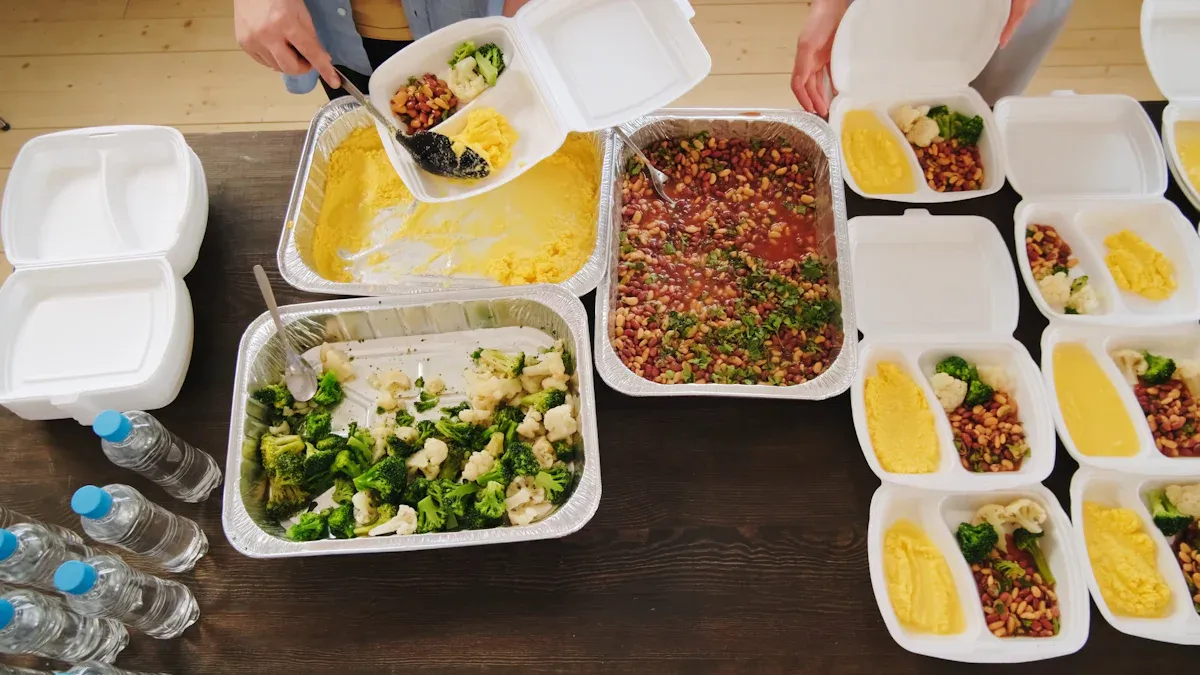
You need plates that work for real life. Bagasse plates are very strong. They do not bend or leak when you serve big meals. You can put hot food or greasy food on them. The plates stay firm and do not break. Bagasse plates hold more weight than most plastic or paper plates. You can stack pancakes or pour sauce, and the plate stays solid.
Here’s a simple chart to show how bagasse plates compare:
|
Material Type |
Endurance/Strength |
Heat and Moisture Resistance |
|---|---|---|
|
Bagasse Pulp |
High |
High |
|
Recycled Plastics |
Variable |
Low to Medium |
|
Paper Disposables |
Lower |
Lower |
Bagasse plates do not get soft with hot soup. They can handle heat up to 203°F (95°C). Some plates work at even higher temperatures. You can use them for steaming food. They do not bend or let out bad stuff. Plastic plates can melt or get weak. Bagasse plates stay safe and strong with hot or greasy foods. You get a clean meal every time.
Tip: Bagasse plates are great for parties and picnics. You do not have to worry about leaks or soggy plates.
Safe and Non-Toxic
You want plates that are safe for your food. Bagasse tableware does not have BPA, PFAS, or phthalates. These plates do not let bad chemicals touch your food. Bagasse plates follow strict safety rules in the U.S. and other places.
Here are some safety certifications for bagasse plates:
|
Certification |
Region/Authority |
Scope/Focus |
|---|---|---|
|
FDA (U.S.) |
United States |
Food contact safety under CFR Title 21 |
|
EN 13432 |
European Union |
Compostable and food-contact safe certification |
|
LFGB |
Germany |
Natural and plastic food contact materials safety |
|
ASTM D6400 |
United States |
Compostability and food contact testing |
|
BPI |
North America |
Compostable product certification based on ASTM standards |
|
OK Compost / TÜV OK Compost |
International (TÜV Austria) |
Industrial and home compostability certification |
Bagasse plates pass tests for taste and smell. They do not change your food. You can serve meals to family and friends and feel safe. Your food stays fresh and tasty.
Note: Picking bagasse tableware helps keep you healthy. It also helps the planet.
Microwave and Freezer Safe
You want plates that fit your busy life. Bagasse plates work in the microwave and freezer. You can heat leftovers or freeze food. Bagasse plates do not melt or crack when heated. They do not let out bad chemicals. The plates stay strong with hot soup or frozen treats.
Here is a chart to show how bagasse plates work:
|
Feature |
Bagasse Products |
Plastic Containers |
Styrofoam Containers |
|---|---|---|---|
|
Microwave Safety |
Safe, toxin-free |
May release harmful chemicals |
Unsafe, melts easily |
|
Freezer Suitability |
Excellent, durable |
Can become brittle |
Poor, cracks in cold |
|
Biodegradability |
Compostable in 60-90 days |
Takes 500+ years to decompose |
Non-biodegradable |
|
Environmental Impact |
Sustainable, reduces waste |
High pollution risk |
High landfill contribution |
Bagasse plates work for hot and cold foods. You can freeze soup or heat meals. The plates do not leak or get soggy. You do not have to worry about bad chemicals.
If you want to try bagasse plates, look at the FastFoodPak collection. You will find many choices for every meal. Make your next meal safer and greener.
Callout: Bagasse tableware lets you serve, store, and reheat food. You get all these benefits with one eco-friendly choice.
Bagasse Tableware vs. Traditional Options
Bagasse vs. Plastic
You want to help the planet. Bagasse plates are a good choice. They come from sugarcane fiber. This is a renewable resource. Plastic plates use petroleum. Petroleum is not renewable. It hurts the environment. Bagasse plates help lower landfill waste. They also cut greenhouse gas emissions. Plastic plates last for hundreds of years. They break into microplastics. Bagasse plates break down in a few months. They turn into compost that helps the soil. Picking bagasse tableware supports a circular system.
Here’s a quick comparison:
|
Aspect |
Bagasse Plates |
Plastic Plates |
|---|---|---|
|
Raw Material |
Sugarcane residue |
Petroleum |
|
Biodegradability |
Breaks down in months |
Persists for centuries |
|
Compostable |
Yes |
No |
|
Environmental Impact |
Low, supports soil |
High, pollutes land/water |
Tip: Businesses can help the earth by using bagasse tableware. They can also save money on waste costs.
Bagasse vs. Paper
Bagasse plates are better than paper plates. Paper plates come from trees. Trees take many years to grow. Making paper plates uses lots of water and energy. It can cause deforestation. It also hurts animals and plants. Bagasse tableware uses farm waste. You do not need to cut down trees. Making bagasse plates uses less water and energy. This makes them more eco-friendly.
|
Feature |
Bagasse Plates |
Paper Plates |
|---|---|---|
|
Source |
Sugarcane by product |
Wood pulp (trees) |
|
Water Use |
Low |
High |
|
Deforestation |
No |
Yes |
|
Durability |
Strong, heat-resistant |
Less durable |
You help save forests and water when you pick bagasse plates.
Sustainable Choice
Bagasse tableware is a smart choice for the earth. These plates break down fast and help the soil. Bagasse plates start as farm waste. They become tableware. Later, they turn into compost. This cycle saves resources and cuts pollution. Every time you use bagasse plates, you help the planet. Pick bagasse tableware to lead others to a greener future.
When you pick bagasse tableware, you help the earth. Bagasse tableware is made from sugarcane fiber that grows back each year. It breaks down fast and does not fill landfills with plastic. These plates and bowls are strong and safe for hot or cold foods. More people use bagasse tableware to live in a greener way. You can join them and help the planet with every meal.
FAQ
What makes bagasse plates a better option for a sustainable ecosystem?
Bagasse plates come from sugarcane fiber that grows back each year. These plates help the environment because they break down fast. They help cut down on plastic and paper trash. When you pick bagasse plates, you help keep the earth clean.
Are bagasse plates truly compostable and biodegradable?
Yes! Bagasse plates can go in your compost pile. With the right composting, they turn into soil nutrients. This helps the earth and gives real benefits to nature.
How do bagasse plates compare to other eco-friendly alternatives?
Bagasse plates use leftover farm material, not trees or oil. They are strong and safe to use. Every time you pick bagasse plates, you help the planet more than with regular plates.
Can I use bagasse plates for hot or cold foods?
Yes! Bagasse plates work for hot and cold foods. They do not leak or get weak. You get safe plates for every meal and help the earth too.
Why should I switch to bagasse tableware for my events?
Using bagasse tableware shows you care about the earth. You pick a natural and green choice. Your guests see you want a cleaner future. Make the switch and help others choose better for the planet.


