

Fastfoodpak
Customized Printed Flyer Trifold Brochure Instruction Manual Advertising Leaflet Takeout Menu Poster Printing
Customized Printed Flyer Trifold Brochure Instruction Manual Advertising Leaflet Takeout Menu Poster Printing
 Printing Customizable
 Material Customizable
 Capacity Customizable


Couldn't load pickup availability
Product Description
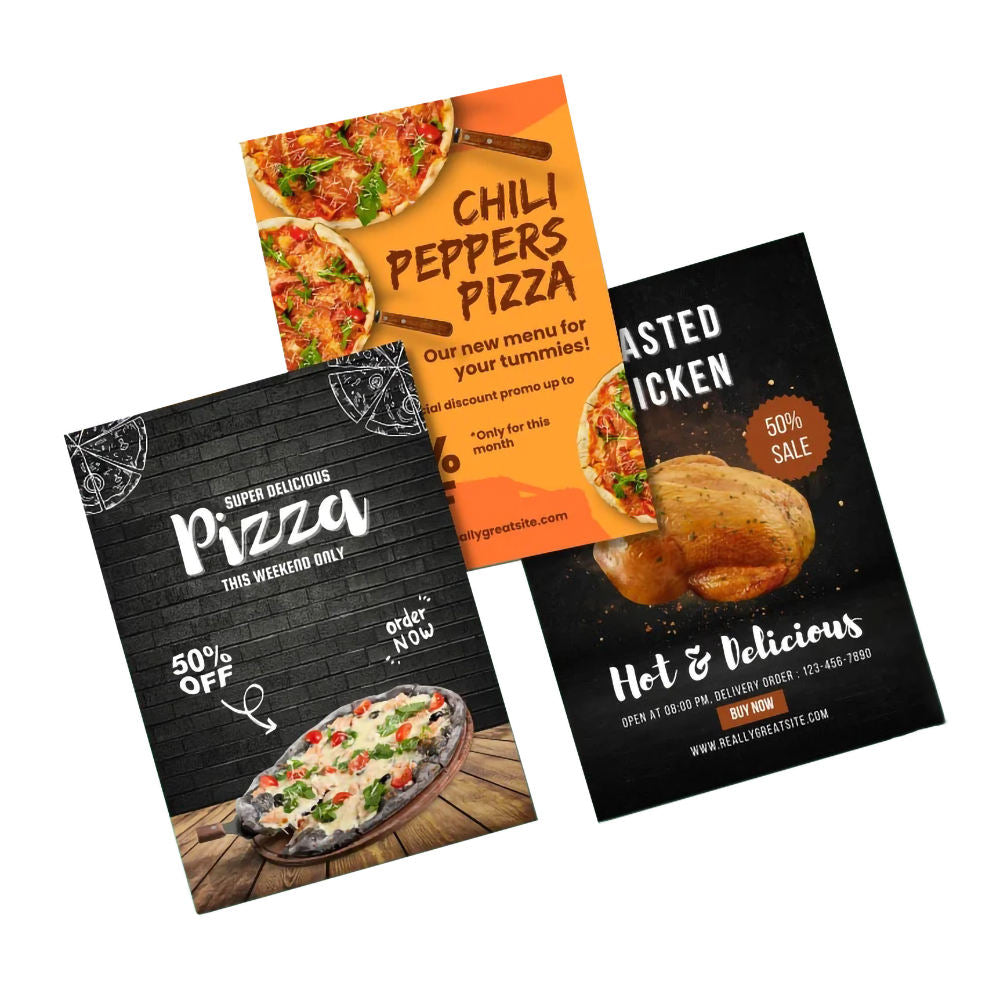
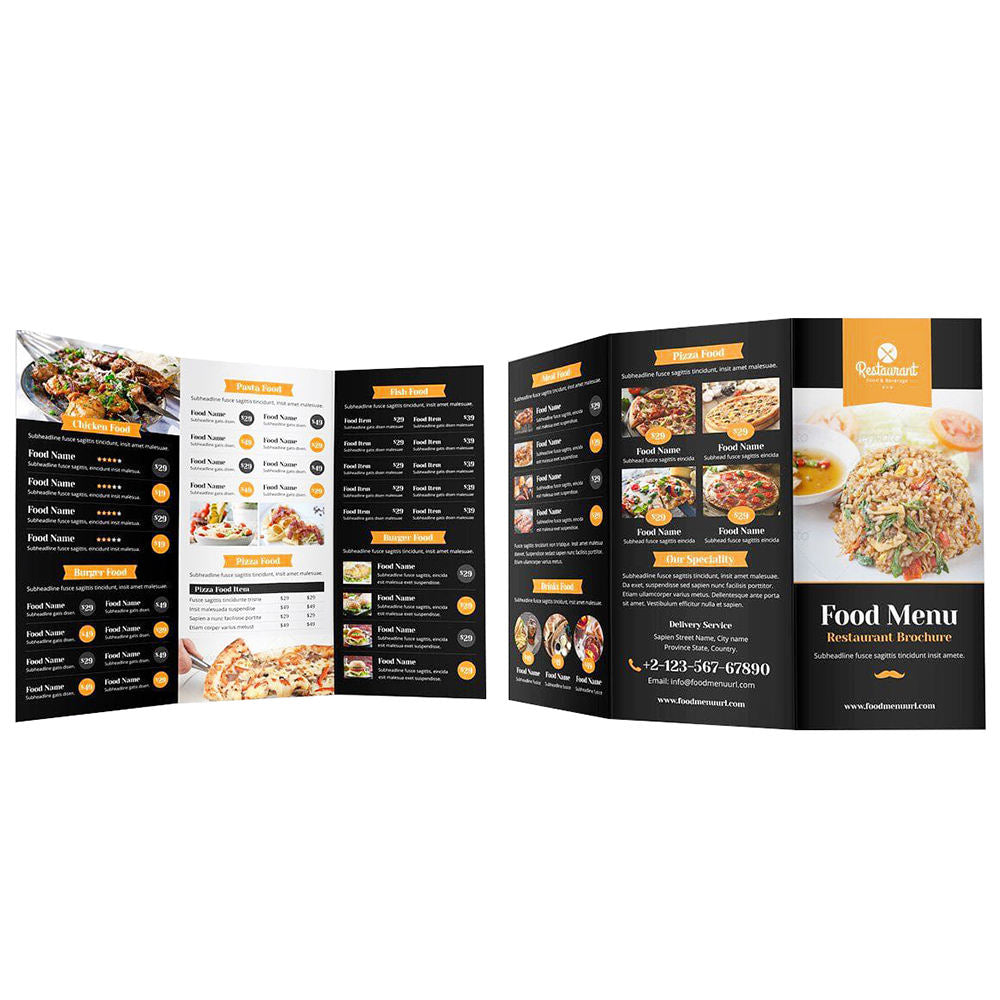
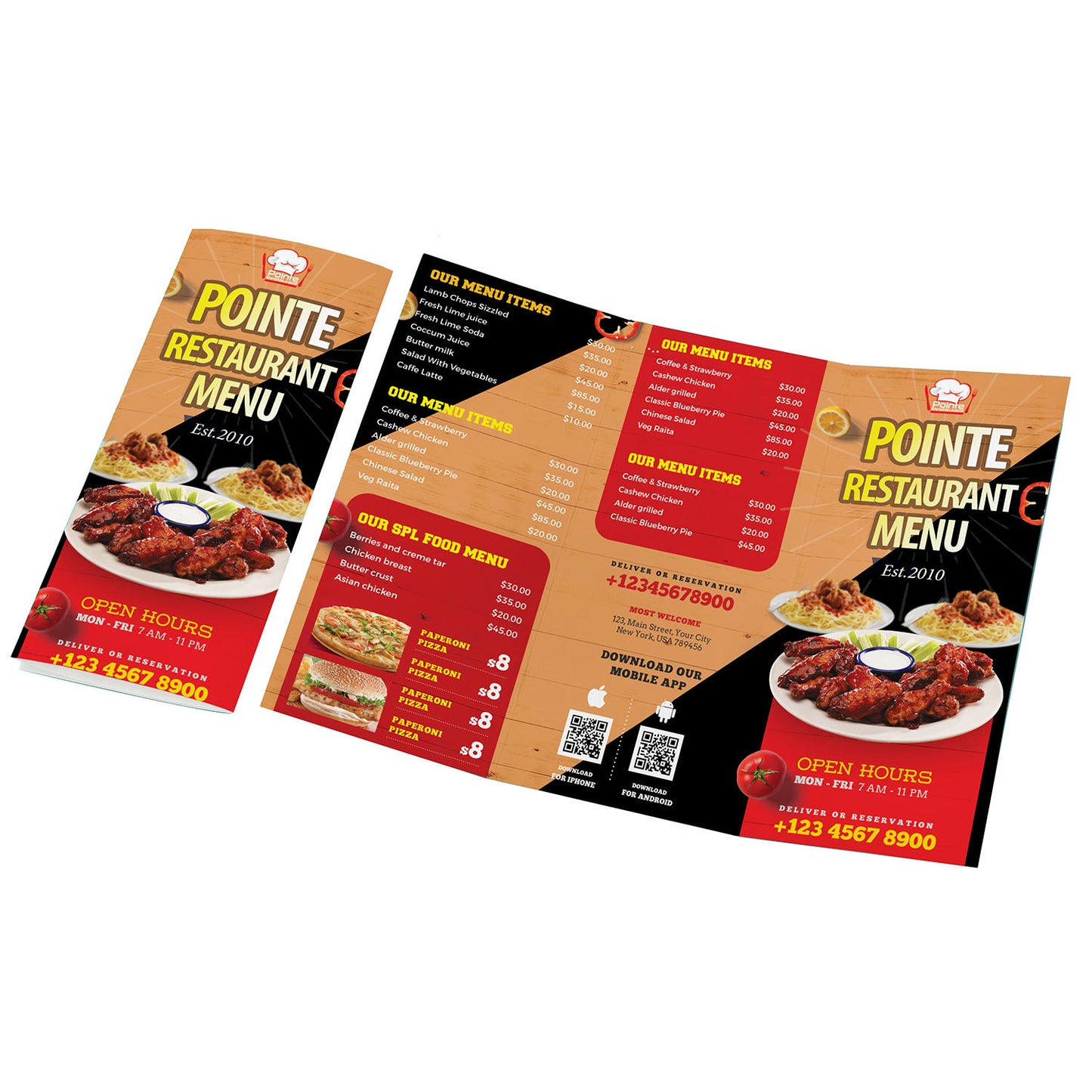
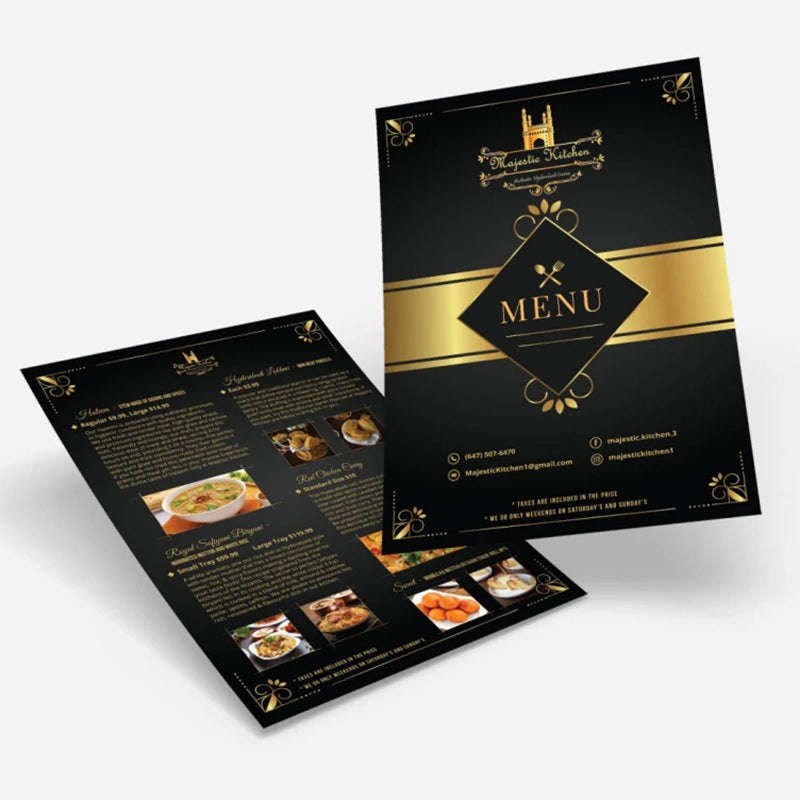
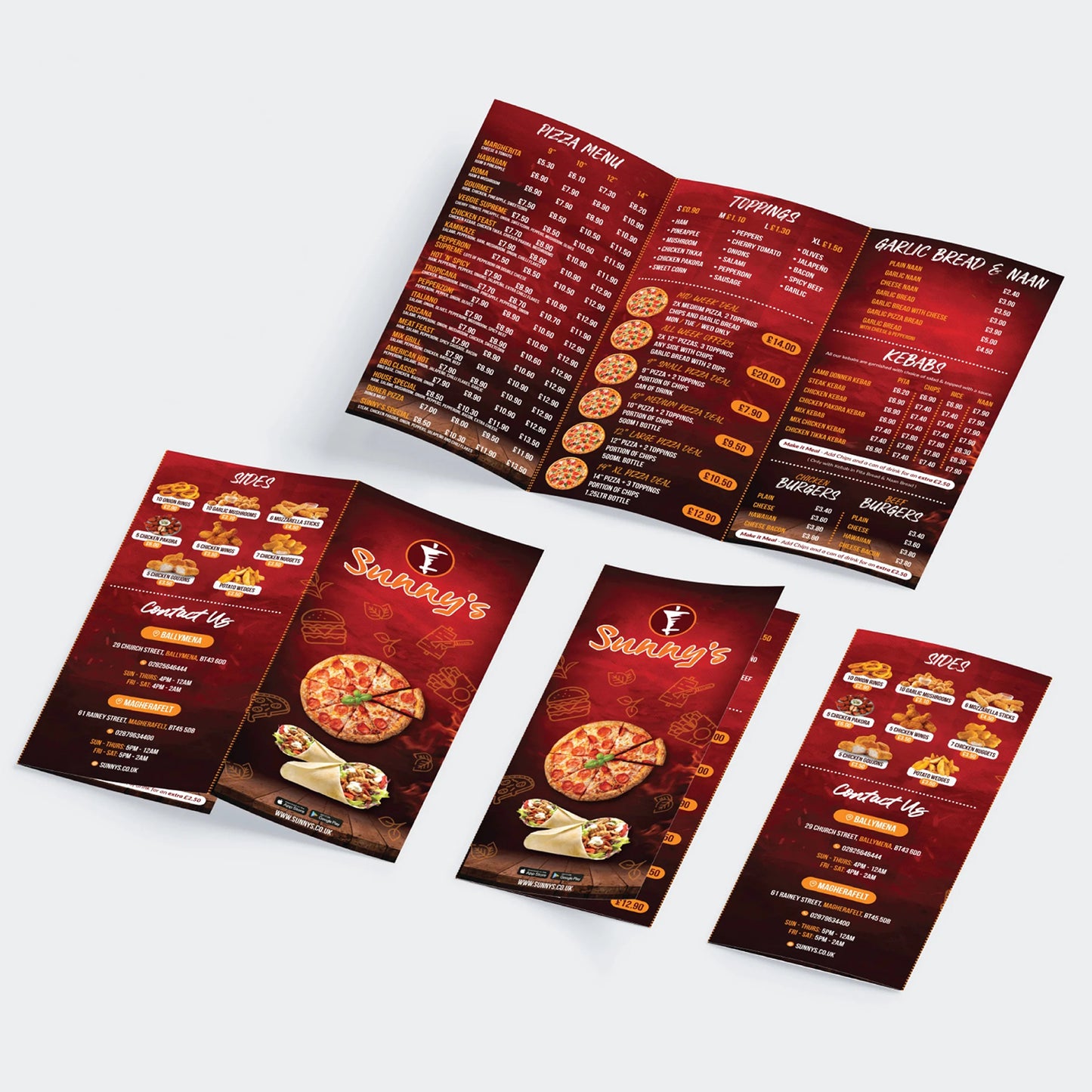
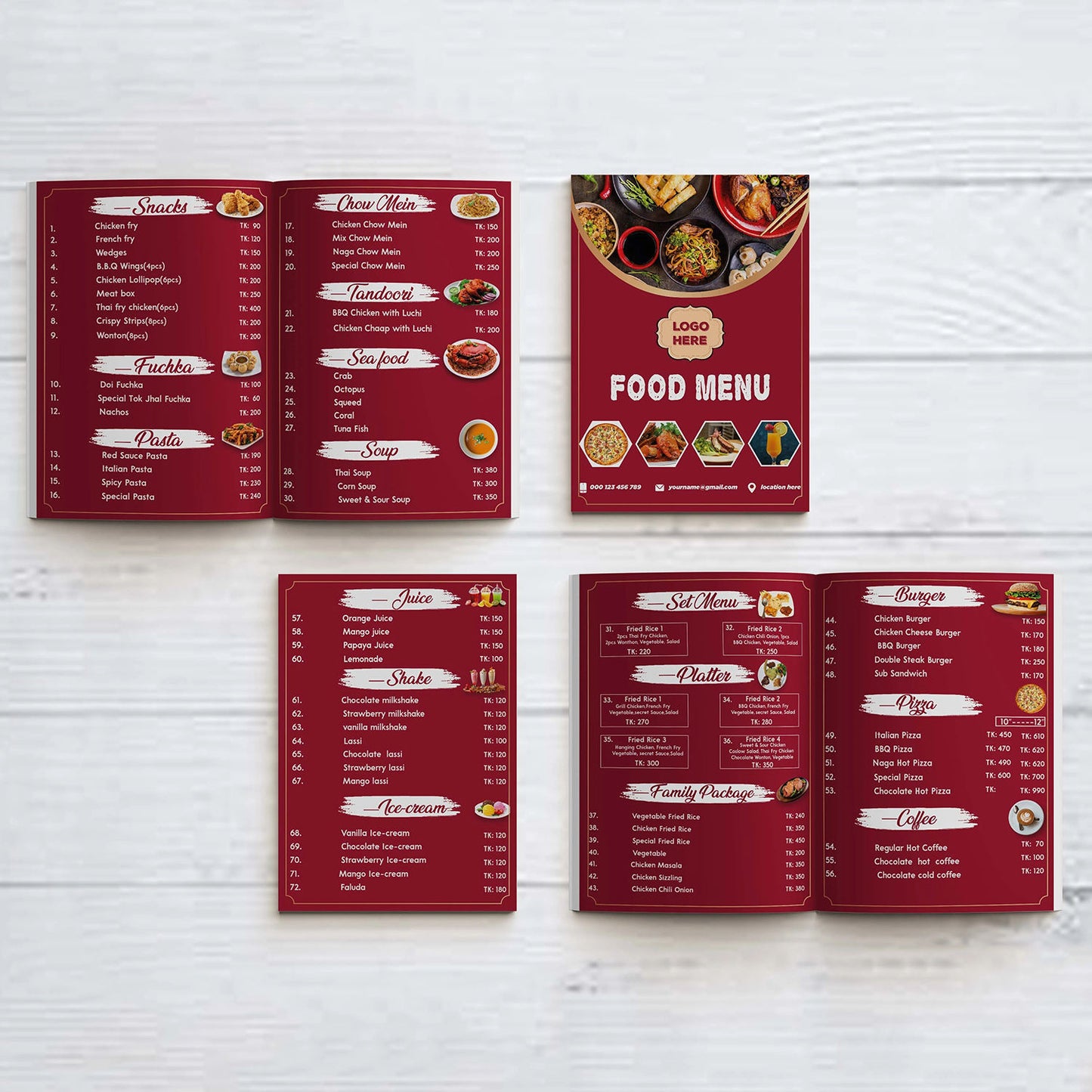
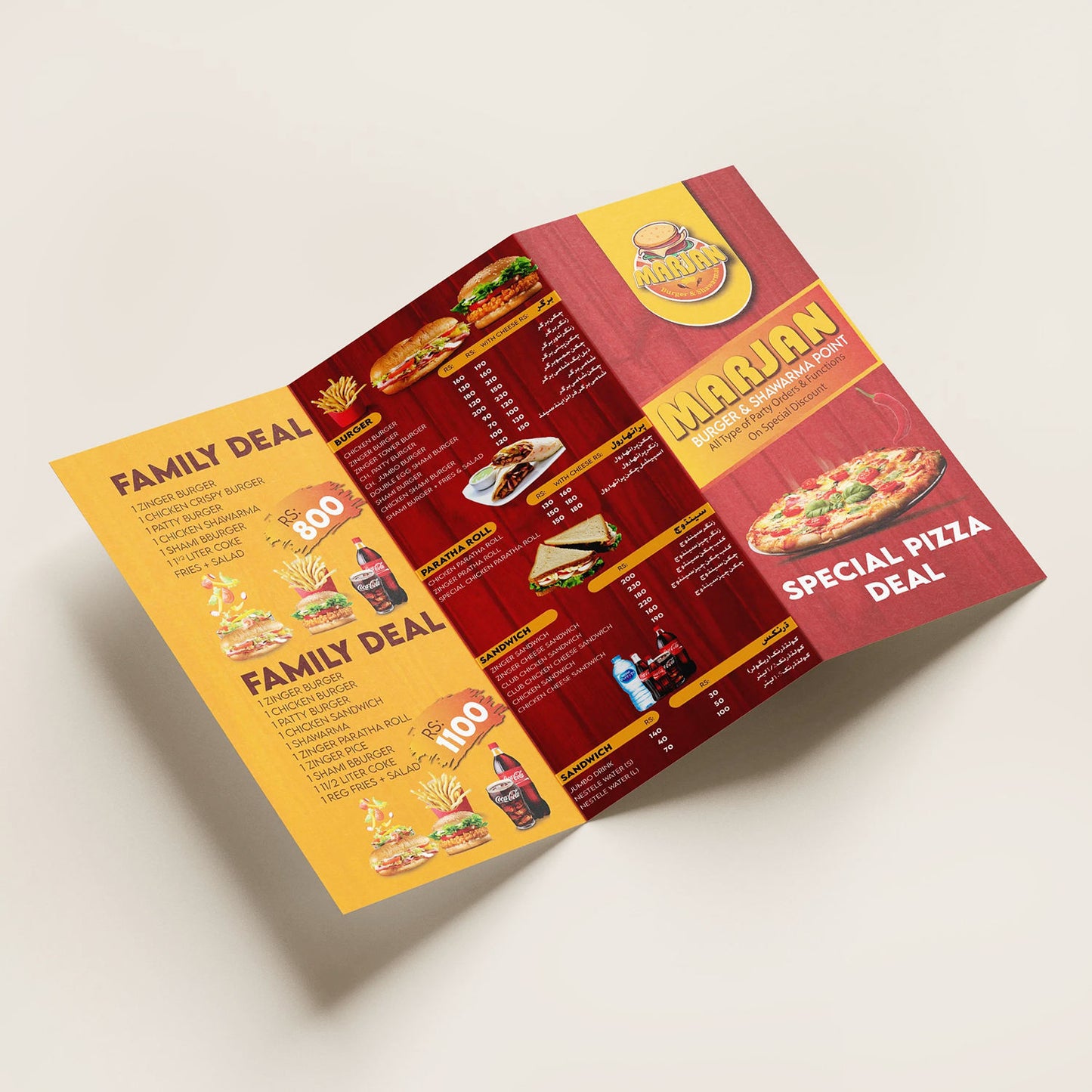
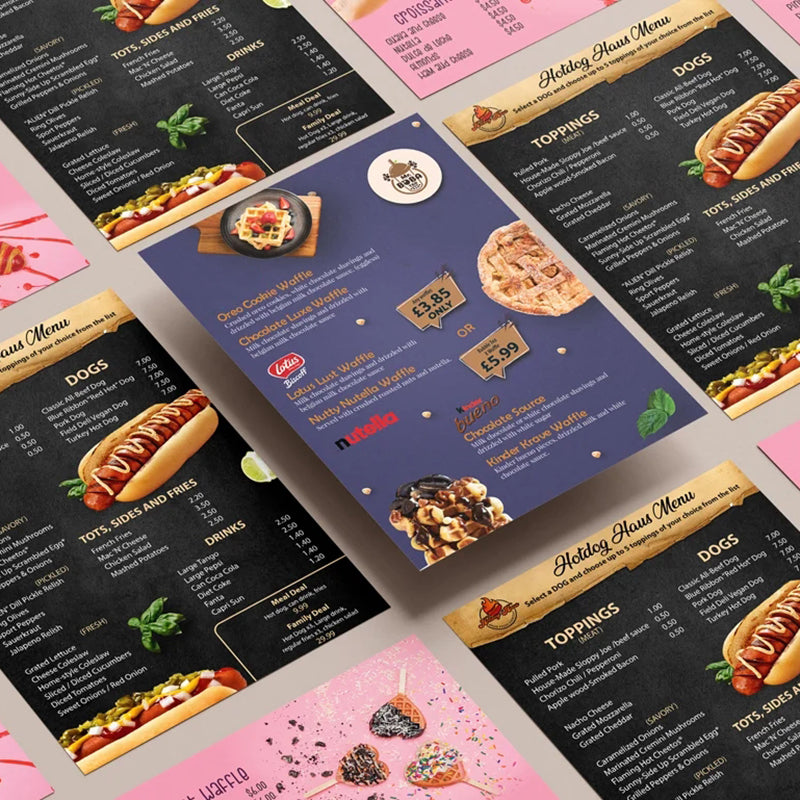
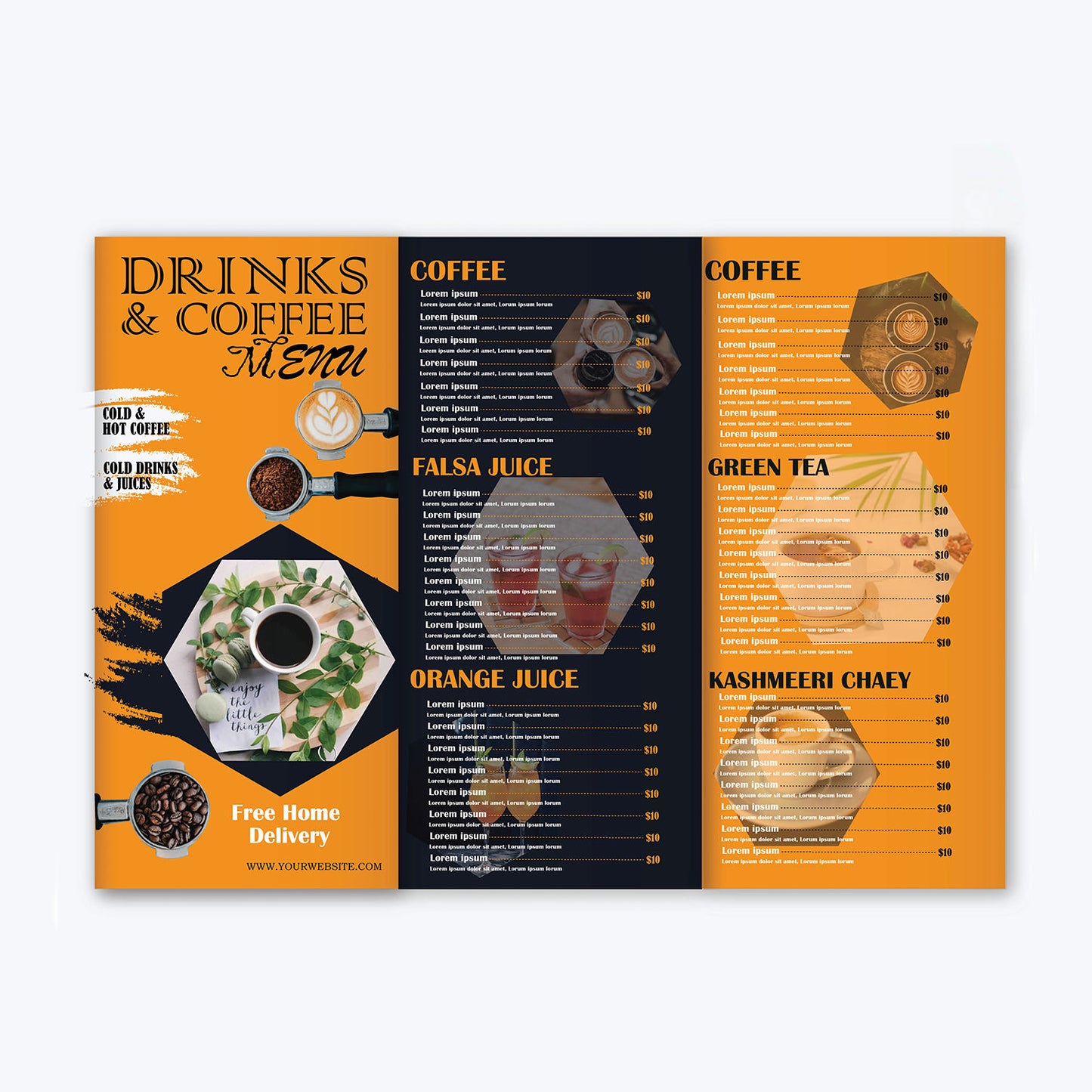
A launch calls for flat promotional sheets, a counter for folded takeout menus, and a rollout for one artwork across both. Our brochure printing services build every format from the same approved files, so a run of trifold brochures and a set of menu cards share colour targets and finishing. Our flyer printing services cover the high-volume handouts, while custom menu printing handles pieces that stay on the table. Art paper or kraft, coated or plain, each sheet is printed to your dimensions and creased to the panel layout you sign off. The gallery shows flat sheets and folded panels throughout. Send artwork and a target size, and we match stock, fold sequence, and finish to the handout.

Flat Sheets and Folded Panels

Two forms cover this category, and the gallery confirms both. Flat single sheets serve as handouts, counter cards, and larger promotional prints; nothing is folded, so the whole sheet stays open for imagery. Folded pieces divide that sheet into panels — a bi-fold gives four, a tri-fold six — which suits a sectional takeout menu or an instruction leaflet. Panel count, size, and fold direction follow the artwork, not a fixed die. With trifold brochures, the inward panel sits a few millimetres shorter so the piece closes flat without buckling. Heavier stock holds a crease better on wide sheets; lighter stock suits high-volume handouts. Distribution decides format and grammage.
Ink, Colour Targets and Fold Integrity

Process inks build photographs and gradients; a mixed spot ink holds a logo to one recipe across a whole chain. Our brochure printing services set that choice from the artwork, not a price list. Dense ink needs care on a folded job: a solid dark panel across a crease can split the coating and show white fibres. We crease before folding, keep heavy coverage off the fold line, and add matt laminate or varnish for counter use. Foil and embossing sit on a flat panel, not a hinge, where repeated flexing lifts the layer. On uncoated kraft the same ink reads warmer, so we proof on the real stock.
Artwork Files, Bleed and Small Type

Files vary more than the finished pieces. A flat handout needs bleed and a safe margin; a folded job needs its panel order mapped as outside and inside spreads, because the leftmost panel on screen is not what a reader sees first. Our design team rebuilds both at no charge, so a rough PDF is enough to start. Small type is the constraint on an instruction leaflet: under six points, fine strokes fill in on uncoated kraft, and reversed white text closes up sooner. We flag those areas before plating. For several language or store versions in one run, we keep the base plates and swap only the variable panel, holding menu cards and folded pieces to one colour standard.
Proofing, Runs and Reorders

Approval works in two steps. Stock samples go out free so you can compare art paper with kraft and feel a laminated surface; a printed proof then settles colour and fold position. Nothing moves to the run until that proof is signed. Production takes 8–12 working days at a 10,000-piece minimum, and that schedule holds for one flat sheet or several folded formats. Our custom menu printing often splits that minimum across versions: a dine-in menu, a takeout leaflet, and a seasonal handout in one order. We file the approved proof, plate settings, and fold drawing, so a later reorder matches the first batch instead of drifting a shade.
| Material | Art Paper/Kraft Paper(Thickness is Customized) |
| Dimensions | All Custom Sizes & Shapes |
| Color | CMYK Printing, PMS or No Printing as your request |
| Advantages | Luxury Effect, Free Design, Fast Delivery, etc |
| MOQ | 10,000 PCS |
| Sample Fee | Samples in stock are FREE |
| Lead Time | 8-12 working days |
| Product Process | Foil stamping/UV coating/Embossing/Varnishing/Matt laminating, etc |
| Application | Fastfood, Restaurant, etc.. |
Customization Examples


Related Products


Why Choose Our Packaging Solution

10K+ Brand Cooperated
Delivered reliable packaging solutions that enhance product value, build brand recognition, and support long-term business growth.

200+ Skilled Employees
We operate as a large, professional company delivering reliable packaging solutions and dedicated support for your business success.

6 Offices Networks
With offices in China, Vietnam, Hong Kong, the USA, and the UK, we export quality packaging solutions to brands worldwide.

3 Modern Factories
Equipped with advanced production lines, our three modern factories ensure high-quality packaging and fast lead times.

Packaging Excellence You Can Rely On
At Fastfoodpak, we operate world-class manufacturing facilities equipped with advanced printing, forming, and packing lines. From design to production, our experienced team ensures your custom packaging projects are delivered with uncompromising quality and speed. Partner with us to enhance your brand with safe, eco-friendly, and cost-effective disposable food packaging solutions.


Multi-certification for Trust

One-stop Custom Packaging Solution in Markets
-

Coffees
View MoreWe provide complete packaging solutions for coffee shops, including custom printed hot cups, cold cups, cup sleeves, lids, and carry bags. Whether you’re a local café or a global coffee chain, our high-quality, food-safe packaging helps enhance your brand image and create a better customer experience.
-

Fast Food
View MoreFor fast food brands, we produce durable and practical packaging such as burger boxes, fries containers, paper cups, and takeaway bags. All can be custom printed with your logo and designs to strengthen brand recognition while ensuring convenient and safe food delivery to your customers.
-

Restaurant To-Go
View MoreWe create a wide range of takeout packaging solutions for restaurants, including paper food boxes, soup cups, beverage cups, and eco-friendly bags. Our customized packaging not only ensures food safety and leak prevention but also elevates your brand presentation for a professional to-go experience.
-

Bakery
View MoreFrom pastry boxes and paper bags to coffee cups and dessert containers, we offer tailor-made packaging for bakeries to keep your baked goods fresh and looking beautiful. Our custom designs make your packaging an extension of your brand, helping you stand out in a competitive market.


