How Light Food Packaging Benefits Manufacturers and Consumers

Light food packaging helps you and companies in many ways. You can save money, keep food safer, and use it more easily. Companies pick this kind of packaging because it needs less stuff and less energy. Life Cycle Assessments show lighter plastics cut down on transport pollution and waste. Some studies say how packaging is made and used can really affect the environment.
Key Takeaways
- Light food packaging saves money because it uses less material. This lowers costs for making, shipping, and storing food for companies and people.
- Using lightweight packaging helps the environment. It makes less trash, causes less pollution, and lowers carbon emissions.
- Light packaging keeps food safe and fresh. It uses strong seals and smart materials. It protects food as well as heavier packages.
- Lightweight designs make food easy to carry, open, and store. This makes life easier at home, school, or when you travel.
- Buying products with light, eco-friendly packaging helps brands that care about the planet. It also pushes the food industry to use greener choices.
Light Food Packaging and Cost Savings
When you pick light food packaging, you help save money. This helps both companies and you. Light packaging uses less material and weighs less. This saves money when making, shipping, and storing food.
Lower Production Costs
Using less material can save a lot of money. Companies like Nestlé and Diageo have shown this works. Even small changes in packaging can save a lot. Look at this table:
|
Company |
Packaging Change |
Material Reduction |
Impact on Production Costs |
|---|---|---|---|
|
Nestlé |
Made water bottles lighter by 22% in 10 years |
Saved over 142,000 metric tons of packaging by 2019 |
Saved a lot of money by using less packaging |
|
Diageo |
Changed Smirnoff 1.75l bottles by taking off the handle |
Saved 1,323 tons of packaging; bottles are 12.6% lighter |
Saved money on materials and shipping because bottles weigh less |
When companies use less plastic or switch to flexible packaging, they spend less on materials. Induction heat sealing also cuts down on plastic for caps and bottle necks. This makes the process better and cheaper. When companies save money, you might pay less for food at the store.
Flexible packaging, like pouches and bags, uses thin materials but keeps food safe. Sometimes, flexible packaging costs a little more per piece than regular plastic. But companies save money on shipping and handling, so it is still a good deal.
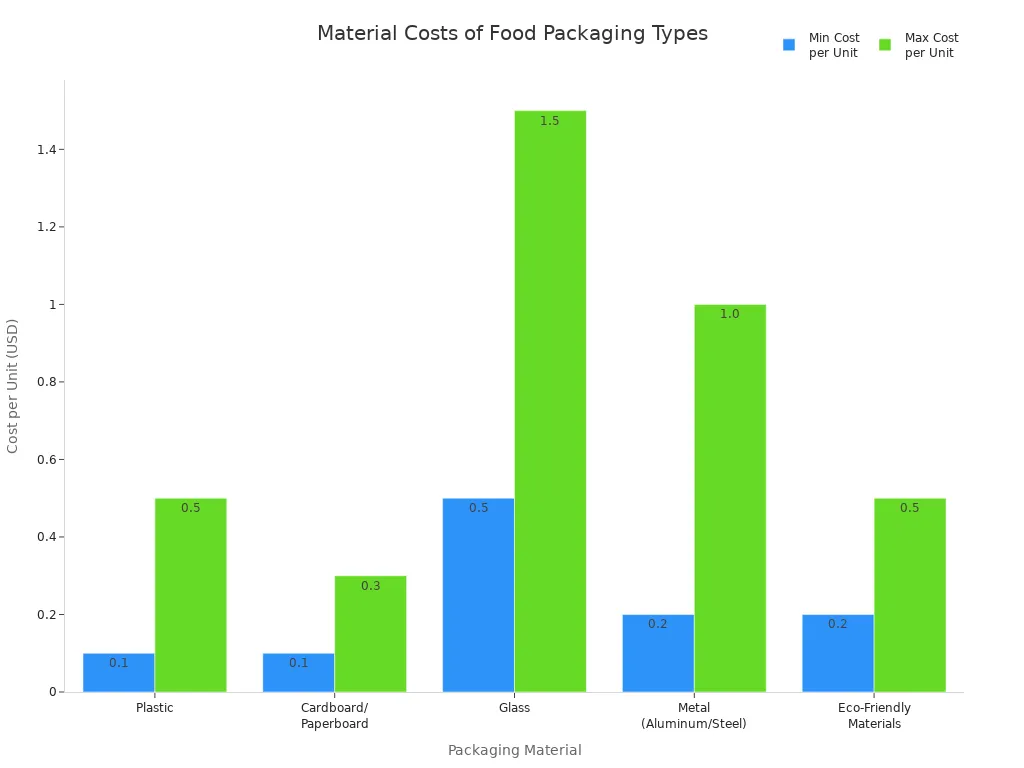
Here is a table to show how packaging materials compare:
|
Packaging Material |
Cost Range (per unit) |
Characteristics and Cost Implications |
|---|---|---|
|
Plastic |
$0.1 – $0.5 |
Flexible and cheap; flexible packaging costs a bit more because it is harder to make |
|
Cardboard/Paperboard |
$0.1 – $0.3 |
Cheap and good for the planet; design can change the price |
|
Glass |
$0.5 – $1.5 |
Heavy and costs more to ship, but keeps food fresh |
|
Metal (Aluminum/Steel) |
$0.2 – $1.0 |
Strong and keeps food longer, but costs more to make |
|
Eco-Friendly Materials |
$0.2 – $0.5 |
Costs more than regular plastic; includes biodegradable and recycled stuff |
Reduced Shipping Expenses
Lighter packaging lets you move more food at once. This means you spend less on fuel. Danone used lighter, recyclable packaging and saved 12% on shipping. Flexible packaging makes each shipment lighter and smaller. This means more items fit on each truck or pallet. Fewer trips are needed, so less fuel is used.
Switching to lighter things, like plastic pallets instead of wood, helps too. Plastic pallets are about 35% lighter. This lets you load more food per shipment. It saves money and helps companies deliver food faster.
Tip: Flexible packaging saves money and helps the planet by using less fuel and making less pollution.
Efficient Storage
Light food packaging makes storage easier for companies and you. Here are some ways it helps:
- Light packaging is easy to carry, so workers move it faster.
- Flexible packaging lets companies put more on each pallet, saving space.
- You can fit more food in your pantry or fridge because it takes up less room.
- Lighter packages are easier to lift and stock, so it is safer and faster.
If companies make packaging 20% lighter, they can fit up to 16% more on each pallet. This saves space in warehouses and stores. It also lowers storage costs. Flexible packaging makes it easier to keep track of products and move them quickly.
Note: Picking light food packaging helps cut down on waste and makes storing food at home easier.
Lightweight Packaging and Sustainability
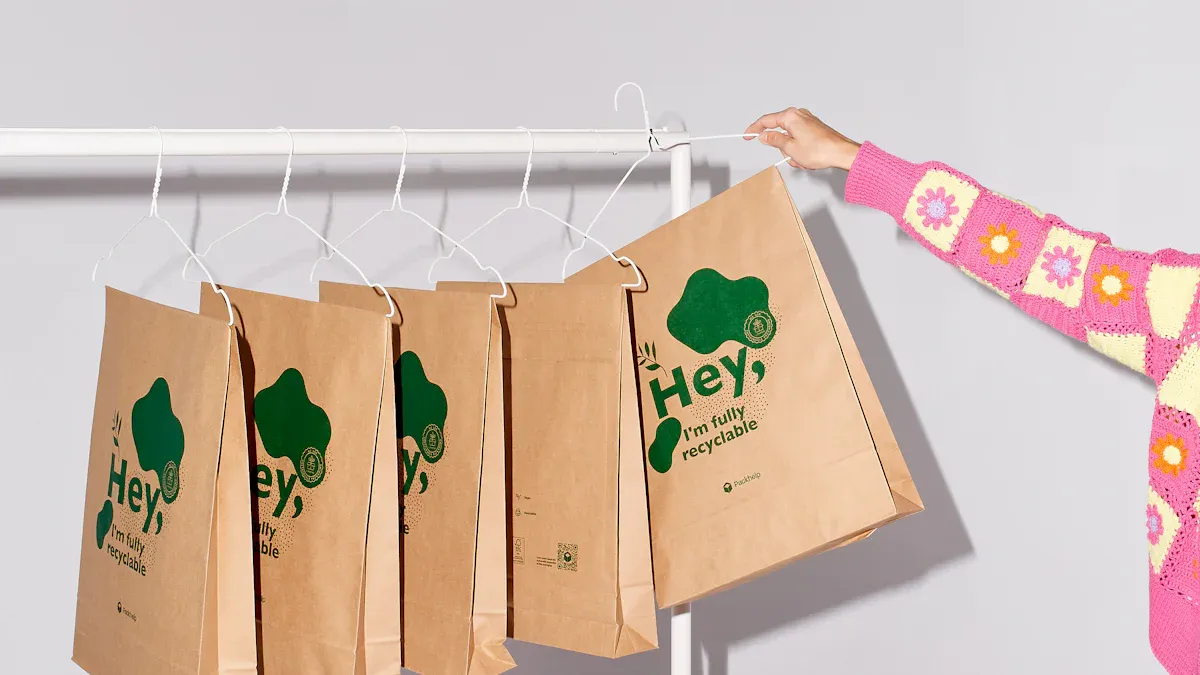
Lightweight packaging is good for you and the Earth. When you pick lighter packages, you help the planet. You use fewer resources and make less trash. This also means less pollution in the air. Companies save energy when they make and move these packages. This part will show how lightweight packaging helps the environment. It also explains why it is smart to use for green products.
Less Material Use
Using less material in packaging helps nature. Lightweight packaging often swaps heavy plastics for new things like biopolymers and agro-waste fibers. These break down faster and cost less to make. Many companies now use biodegradable bags, recyclable paper, and reusable glass. These choices cut down on plastic waste and make packaging work better.
|
Material/Component |
Reduction or Replacement Method |
Reduction Amount/Impact |
|---|---|---|
|
Polyethylene terephthalate (PET) bottles |
Lightweighting by processing adjustments and finish area reduction |
|
|
Starch (structural additive) |
Added to pouches to reduce packaging weight |
25% reduction in packaging weight |
|
Polyethylene furanoate (PEF) |
Bio-based liner supported by paper in bottles |
Supports bio-based packaging alternatives |
|
Polyethylene (PE) films |
Use of cavitation agents to create void spaces reducing density |
35% reduction in PE film content |
|
Corrugated boxes |
Use of lighter paper grades in plies |
Up to 25% paper savings |
|
Labels on bottles and cans |
Removal by etching or direct digital printing |
Eliminates label materials, improving recyclability |
|
Tin-ties on bags |
Removal of tin-ties |
Annual savings of 215,000 lbs steel, 151,000 lbs plastic, 700 lbs glue |
Even small changes, like lighter bottles or taking off extra parts, help a lot. Flexible packaging, like pouches and thin films, uses less plastic and paper. You still get safe food, but there is less waste.

Note: Picking green packaging helps you lower your impact on the Earth and supports companies that care about the planet.
Lower Carbon Footprint
You make less pollution when you choose lightweight packaging. Using less material means less pollution from start to finish. You help cut down on emissions when making and moving food. Flexible packaging lets you ship more food with fewer trucks. One truck of flexible pouches can carry as much as 26 trucks of glass jars. This saves fuel and cuts greenhouse gases.
- Lightweight packaging uses fewer raw materials, so factories need less energy.
- Flexible packaging takes up less space, so you can move more food at once and use less fuel.
- You help keep food fresh longer, so less food is wasted. This also lowers the total carbon footprint.
Sometimes, heavier packaging keeps food safe for longer. For foods like meat and dairy, packaging that lasts longer can lower waste, even if it uses more material. But most of the time, lightweight packaging gives you the best mix of protection and green benefits.
Tip: The energy you save by picking lighter packaging adds up over time. Every time you choose a lighter package, you help the Earth.
Waste Reduction
You help cut down on trash when you use lightweight packaging. Flexible packaging makes less garbage because it uses less stuff. You also help recycling work better when you pick packages that are easy to recycle. Some lightweight materials, like expanded polystyrene (EPS), are now recycled more because of better collection and new machines.
|
Packaging Material |
Recycling Rate & Challenges |
Resource Use & Environmental Impact |
Durability & Reusability |
|---|---|---|---|
|
EPS (Expanded Polystyrene) |
Fully recyclable; recycling rates growing due to improved collection and densification technology |
Low resource use; minimal water and energy in production; lightweight reduces transport emissions |
High durability; reusable multiple times; maintains integrity during lifecycle |
|
Cardboard |
Highly recyclable but limited by degradation and contamination (wax coatings, food residue) |
High resource use; significant water, energy, and chemical inputs |
Less durable; degrades quickly limiting reuse cycles |
|
Molded Pulp |
Theoretically recyclable but coatings and rapid deterioration limit actual recycling |
High water and energy use; chemical treatments increase environmental impact |
Low durability; limited reuse potential |
Flexible packaging gives you more food and less trash. You also help cut down on trucks needed for shipping, which means less pollution. But sorting flexible packaging for recycling can be hard because it mixes different materials. You can help by learning how to recycle these packages the right way.
- Glass and metal packaging is heavy and can break, making more trash.
- Cardboard and paper can get dirty and are hard to recycle.
- Flexible packaging saves space, cuts waste, and helps the planet.
Remember: Every time you pick lightweight packaging, you help make less trash and keep the planet cleaner.
Product Protection
Food Safety
You want your food to stay safe from the factory to your home. Lightweight packaging uses new things like plant-based plastics, paper, and bamboo. These materials keep food safe because they block water and oil. They also follow strict food safety rules. Scientists check these packages to make sure chemicals do not get into your food. For example, migration tests look for small parts moving from packaging to food. Groups like the FDA set limits for chemicals such as BPA to keep you safe. Some packaging has special coatings that stop bad things from getting into food. This keeps your food good and helps the environment.
Note: Lightweight packaging can keep food safe like heavier packaging if it meets safety rules.
Shelf Life
You want your food to last longer at home and in stores. Lightweight packaging uses smart ideas to help with this. For example, induction heat sealing makes a tight seal that keeps out air and germs. This helps milk and other foods stay fresh for more days. Some packages use vacuum sealing or change the air inside to slow down spoilage. Studies show that adding natural antioxidants to packaging can keep food fresh, even with less material. This means your food lasts longer and stays good.
- Modified atmosphere packaging lowers oxygen to slow spoilage.
- High-barrier films block water and light to protect food.
Damage Prevention
You want your food to arrive without dents or spills. Lightweight packaging uses strong but light things like corrugated cardboard, foam, and air pillows. These materials soak up shocks and keep food safe during shipping. Companies use computer programs to test how packaging works when dropped or bumped. They also use smart sensors to watch temperature and movement. This helps keep your food good from the warehouse to your kitchen. Heavier foods may need more protection, but lightweight packaging works well for most foods if designed right.
Tip: Picking the right packaging helps stop damage, saves money, and keeps your food in great shape.
Consumer Convenience
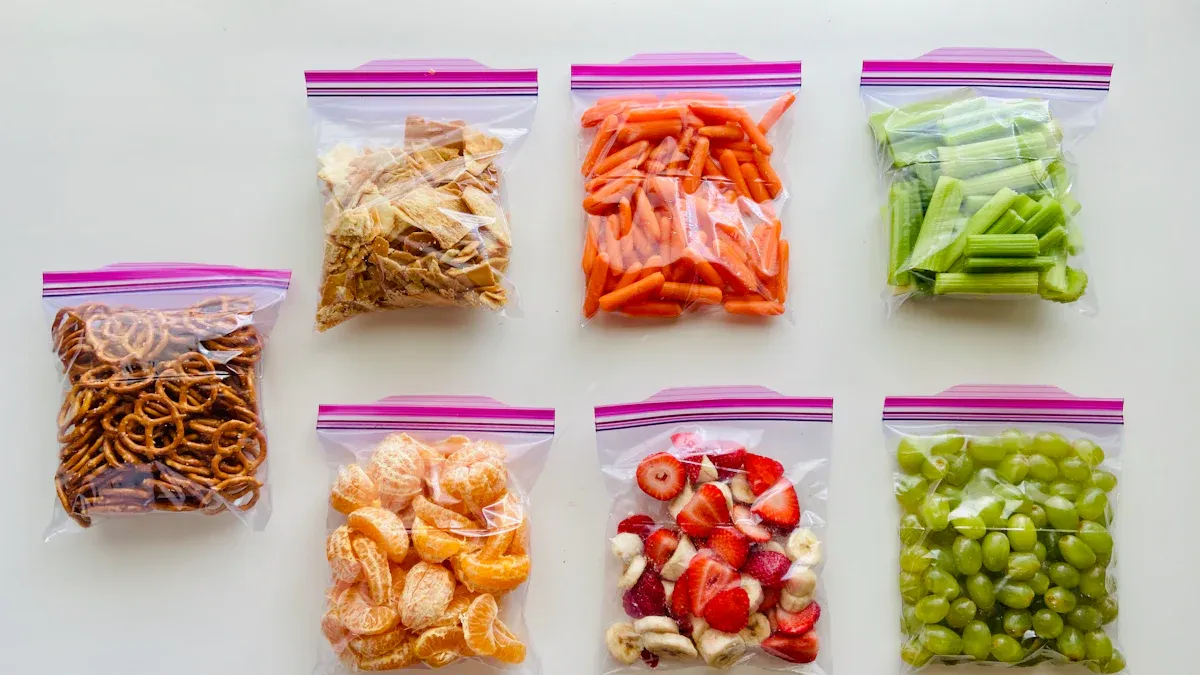
Lightweight food packaging helps you in many ways every day. You want packaging that is quick and easy to use. Companies make packaging to help you at home, school, or when you are out.
Portability
You need snacks or meals you can take anywhere. Lightweight packaging, like pouches and small cartons, makes this easy. You can put a pouch in your bag or lunchbox. It does not add much weight. Many parents think it is important for kids to eat on the go. Most parents would pick flexible packaging over glass jars for baby food. This shows people like packaging that is easy to carry.
- Flexible packaging is light and fits in bags.
- Stand-up pouches with spouts are safe and easy for kids.
- Ready-to-eat snacks use light packaging for fast eating.
Tip: Portable packaging saves you time and lets you enjoy your food more.
Easy Handling
You want packaging that is simple to open and hold. Lightweight designs make it easier to use food packages. Companies add things like pull tabs, zippers, and special bottle shapes. These features help everyone, even kids and older people, use food easily.
-
Ergonomic packaging fits your hand and is easy to grip.
-
Flexible packaging often has zippers you can close again.
-
New materials keep packages light but strong.
Note: Easy-to-use packaging helps everyone get to their food quickly.
Space Saving
You want to save space in your kitchen and pantry. Lightweight packaging is often small and fits well on shelves. Many people do not like big or wasteful packages. Studies show most shoppers like smaller packages that save space. When companies use less material and smart designs, you have more room at home.
|
Packaging Type |
Space Needed |
Consumer Perception |
|---|---|---|
|
Flexible Pouches |
Low |
Saves space, easy to store |
|
Rigid Glass Jars |
High |
Bulky, hard to stack |
|
Cardboard Boxes |
Medium |
Can be wasteful if oversized |
Space-saving packaging helps the planet by using fewer resources. You get less mess and easier storage. Companies also meet your need for easy and green packaging.
Market Trends
Eco-Friendly Demand
More people want eco-friendly packaging every year. This is because you want to help the planet and use less plastic. Companies now pick lighter materials to save energy and make less waste. When you buy products with less packaging or new materials, you help this change happen. Some new materials are biopolymers and seaweed-based coatings.
- Lightweight packaging uses less stuff and makes less pollution.
- Flexible pouches and stand-up sacks are lighter than old containers.
- New materials can cut fuel use by up to 70% compared to old ways.
Here is a table that shows how things are changing:
|
Aspect |
Evidence Summary |
|---|---|
|
Market Size & Growth |
The global eco-friendly food packaging market is worth $227.96 billion in 2024. It is expected to grow 7.6% each year from 2025 to 2030. |
|
Key Drivers |
More people care about the environment. There are bans on single-use plastics. Companies promise to be more green. |
|
Material Innovations |
There are new recyclable, compostable, and biodegradable materials. These include biopolymers and seaweed-based coatings. |
|
Leading Market Segment |
The foodservice segment is the biggest and grows fastest. Quick-service restaurants and delivery services drive this growth. |
Note: What you buy at the store helps decide what packaging companies use in the future.
Brand Reputation
When you pick lighter packaging, you help brands that care about the Earth. Companies that use less material and new ideas get a better reputation. You may see brands like McDonald’s, IKEA, and Unilever changing their packaging. These changes save money and show they care about the planet.
- Flexible packaging can use up to 50% less material but still keep food safe.
- Brands that use less plastic and more recyclable stuff often earn your trust.
- Many shoppers pick products because the packaging looks green.
|
Brand |
Packaging Initiative |
Impact on Brand Reputation and Business Outcomes |
|---|---|---|
|
McDonald's |
Wants all packaging to be renewable, recycled, or certified by 2025 |
People who care about the planet like the brand more. |
|
IKEA |
Uses mushroom-based packaging that breaks down fast |
Makes less waste and costs less to ship; helps IKEA look like a green leader |
|
Unilever |
Uses less plastic, cutting it by 15% since 2010 |
Matches what shoppers want; helps save money |
Tip: When you buy green packaging, you help these brands grow and show others what matters.
Industry Shifts
You help change the food industry by what you buy. Companies now use lighter, reusable, and recyclable packaging. Reports say food makers, stores, and restaurants all want lighter options. They use new things like bioplastics and recycled paper to meet your needs and follow new rules.
The lightweight food packaging market was $29.8 billion in 2024 and is still growing. Companies like Amcor and Sealed Air make flexible pouches and thin containers to save space and money. You see more reusable bags and wraps in stores and online. These changes help keep food fresh, lower shipping costs, and make less waste.
Remember: What you buy and new laws help companies make smarter, lighter packaging.
You can see that light food packaging helps you and companies. It saves money and is good for the planet. It keeps food safe and fresh for longer. Light packaging also makes life easier for everyone. It helps make products better in quality. When you pick packaging that keeps food good, you help set new rules. If you have a business, try using lighter packaging in your products.
FAQ
What is light food packaging?
Light food packaging uses less material and weighs less than traditional packaging. You see it in pouches, thin plastic, or small cartons. This type of packaging helps save money, protects food, and is better for the environment.
How does light packaging help the environment?
You help the planet when you choose light packaging. It uses fewer resources and creates less waste. Factories use less energy to make and move these packages. This means less pollution and a smaller carbon footprint.
Can light packaging keep food safe?
Yes, light packaging can keep your food safe. Companies test these packages to make sure they block germs, water, and air. Many light packages use special seals or coatings to protect food until you open it.
Is light packaging easy to recycle?
Some light packaging is easy to recycle, like certain plastics or paper. Others, like mixed-material pouches, can be harder. You should check local recycling rules. Look for recycling symbols on the package to help you decide.
Why do companies choose light packaging?
Companies pick light packaging to save money and meet your needs. It costs less to make and ship. It also helps brands look eco-friendly. You get food that is easy to carry, store, and use.


